
1. History and Tradition of Pasta
Origin of the Pasta:
The history of pasta is complex, with multiple theories about its origin. Although there has been debate about whether pasta could have Chinese roots, it is widely accepted that it was developed in Italy.
The Etruscans were an ancient civilization that lived in the region of Tuscany and other parts of central Italy. They ate a dough made with grains and water, similar to pasta.
However, pasta in its modern form—made with dry durum wheat—probably took shape in Italy during the Middle Ages.
Italian Culture and Food:
Food plays a central role in Italian culture, and pasta all’amatriciana is one of its most emblematic dishes. In Italy, food is considered a form of art and an expression of cultural identity. Each region of the country has its own culinary specialties and preparation techniques, reflecting the rich diversity of Italian cuisine.
Pasta all’amatriciana, with its tomato sauce, guanciale, and pecorino cheese,, is a true treasure of Italian gastronomy and a symbol of indulgence and satisfaction.
If you want to experience the authenticity of Italian cuisine, an Italian restaurant in Fuengirola is an excellent option.
The trattoria Tutto Bene Fuengirola is particularly known for its delicious pasta all’amatriciana and other traditional dishes.
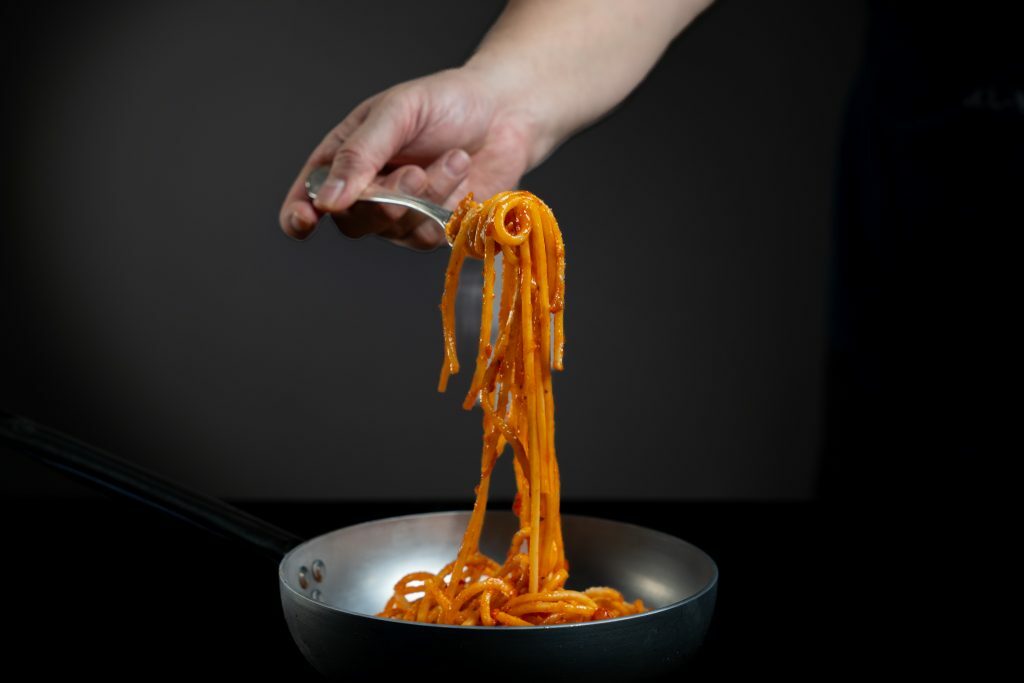
2. Italian Etiquette: How to Enjoy Pasta all’amatriciana
Use of the Fork:
At the Italian table, the fork is the main tool for enjoying amatriciana pasta properly. The most commonly accepted technique is to twirl the bucatini—coated in the delicious amatriciana sauce—around the fork carefully and with skill. This allows the noodles to cling to the fork evenly, ensuring that every bite is packed with flavor and texture. When you visit an Italian restaurant in Fuengirola, you’ll notice that this is the preferred way to enjoy amatriciana pasta, especially at the trattoria Tutto Bene Fuengirola.
Avoid the Knife:
In Italian culinary tradition, using a knife to cut amatriciana pasta is strongly discouraged. The tender, flavorful texture of the sauce blends perfectly with the al dente noodles, creating a harmony of flavors that’s best enjoyed without interruptions. Cutting amatriciana pasta with a knife could alter the desired dining experience and spoil the presentation of the dish, so it’s better to avoid it and enjoy it in its original, delicious form.
Forbidden to Use the Spoon:
Although some may consider it useful to use a spoon together with the fork to twirl the bucatini, in the true Italian tradition this is frowned upon. The correct technique is to use only the fork. Using a spoon is considered inappropriate and can be seen as a lack of respect for Italian culinary tradition.
3. The Gastronomic Experience of Amatriciana Pasta
Flavor and Texture:
One of the highlights when enjoying amatriciana pasta is its exquisite flavor and texture. The combination of tomato sauce with pieces of guanciale and pecorino cheese creates an explosion of flavors in every bite.
In addition, al dente pasta provides that perfect bite feel that perfectly complements the savory sauce. When you visit an Italian restaurant in Fuengirola, be sure to try the amatriciana pasta to experience this wonderful combination. The trattoria Tutto Bene Fuengirola is known for its exceptional interpretation of this dish.
Popular Dishes and How to Enjoy Them:
Amatriciana pasta is one of the most popular dishes in Italian cuisine, and there are several ways to enjoy it correctly. For bucatini all'amatriciana, it is recommended to wrap the noodles around the fork to capture all the flavors in every bite. For other pasta varieties, such as penne or fettuccine, this technique can also be followed to ensure an optimal dining experience. In an Italian restaurant in Fuengirola, such as trattoria Tutto Bene Fuengirola, this technique is followed carefully to offer the best dining experience.
4. Practical Tips for Enjoying Amatriciana Pasta
Using the Fork:
Learning how to handle the fork properly is essential for enjoying amatriciana pasta like a true Italian. To do so, hold the fork firmly and use the rim of the plate to carefully and precisely wrap the bucatini—or the pasta of your choice—around the fork.
This method ensures that every bite is infused with the delicious amatriciana sauce and guanciale, offering an unmatched flavor experience. In an Italian restaurant in Fuengirola, the staff will be happy to teach you this technique. trattoria Tutto Bene Fuengirola is an ideal place to perfect this skill.
Alternatives for the Not-Experts:
There are no alternatives—in the best Italian restaurant in Fuengirola, Tutto bene, we teach you to eat pasta like a true Italian.
5. The Magic of Amatriciana Pasta: Curiosities and Revealed Myths
Common Myths:
One of the most widespread myths about amatriciana pasta is that its preparation is complicated and requires advanced culinary skills. However, the truth is that this delicious recipe is surprisingly simple to make and can be mastered by anyone with a bit of practice and the right ingredients.
Another common myth is that amatriciana pasta is extremely heavy and unhealthy due to its guanciale content. In reality, when enjoyed in moderation and as part of a balanced diet, amatriciana pasta can be part of a healthy lifestyle.
To try an authentic amatriciana pasta, you can visit our Italian restaurant in Fuengirola. The trattoria Tutto Bene Fuengirola is particularly known for its delicious version of this dish.
Fun facts:
Did you know that the original recipe for amatriciana pasta has its origins in the Amatrice region of Italy? This traditional dish has remained practically unchanged over the years, with a simple but delicious recipe that includes tomatoes, guanciale, and pecorino cheese.
Since then, amatriciana pasta has become a classic of Italian cuisine, appreciated all over the world for its unique flavor and simplicity. To taste a truly authentic amatriciana, don’t hesitate to visit our Italian restaurant in Fuengirola, trattoria Tutto Bene Fuengirola, and enjoy a authentically Italian menu.
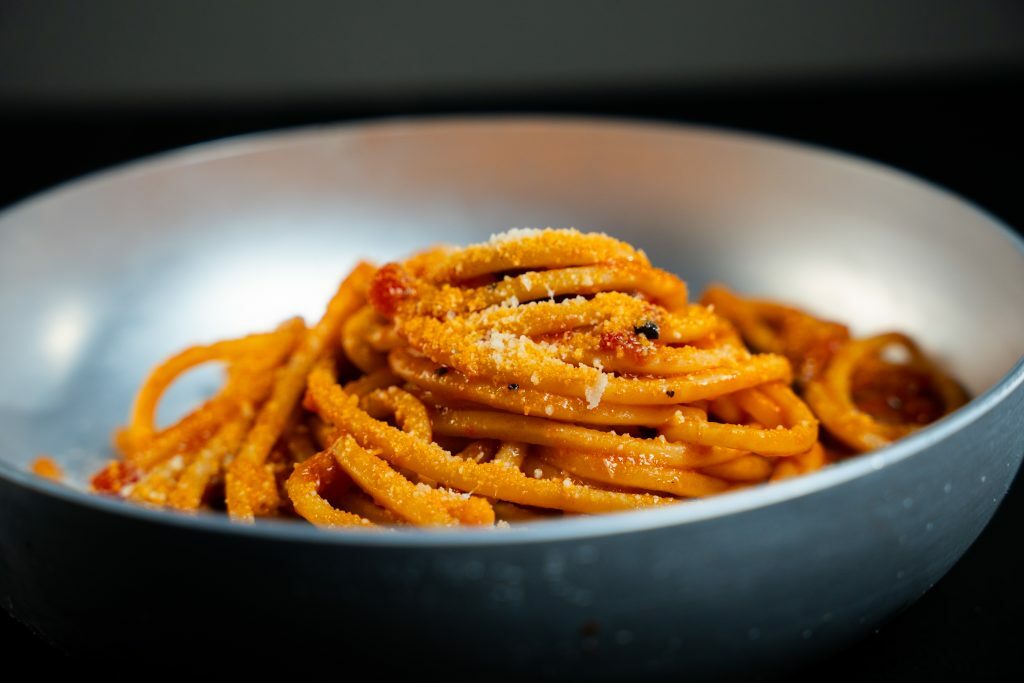
Recipe for the Pasta All'Amatriciana
Ingredients:
400 g bucatini (or spaghetti)
150 g guanciale, cut into strips
400 g peeled and crushed tomatoes
100 g finely grated pecorino romano cheese
1 chili pepper (optional)
Salt and black pepper to taste
Instructions:
In a large skillet, cook the guanciale over medium heat until it’s crispy and has rendered its fat. Remove the guanciale and set aside.
In the same skillet, add the white wine and cook over low heat until it has reduced by half.
Add the crushed tomatoes and the chili pepper (if you’re using it), and simmer over low heat for about 15–20 minutes, stirring occasionally.
Meanwhile, cook the bucatini in a large pot of salted water until al dente. Drain, reserving a little of the cooking water.
Add the guanciale to the tomato sauce and mix well. Adjust the salt and pepper to taste.
Stir the bucatini into the skillet with the sauce, mixing well so they’re fully coated. If needed, add a little of the reserved cooking water to adjust the consistency.
Serve hot bucatini all'amatriciana, generously sprinkled with grated pecorino cheese.